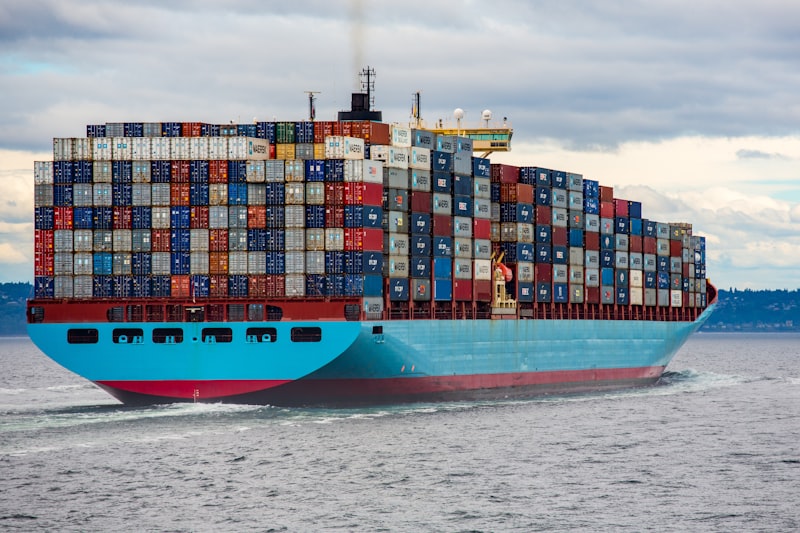

Selecting a maritime provisions supplier is not a small decision. The wrong supplier doesn't just cost money — they cost time, contaminate cold-chain inventory, miss delivery windows, and create the kind of operational friction that compounds across a fleet. In 2026, with margins thinner than ever, getting supplier selection right is one of the highest-ROI activities a procurement manager can focus on.
Here are the five criteria that actually matter — and how to evaluate them before you sign anything.
1. Pricing Transparency (Not Just "Low Price")
A surprisingly low quote is almost always hiding something. Reliable suppliers itemize: unit price, packaging, delivery to vessel, agent fees, taxes, certificates. Suppliers who quote a single lump-sum number are either inexperienced or about to surprise you with addons.
What to demand in every quote:
- Itemized per-SKU pricing in your contract currency
- Clear delivery terms (FAS, FOB, DAP) and who covers what
- Validity period (typically 7-14 days for fresh provisions)
- Substitution policy if an item is out of stock
2. Delivery Reliability (Measured, Not Promised)
Every supplier promises on-time delivery. Few measure it. Ask for their on-time delivery rate for the last 12 months — and ask to see it broken down by port. A supplier with 96% reliability in their home port might be 70% reliable in a port they outsource to a sub-agent.
Practical test: place a small first order for non-critical items 30 days before you actually need the supplier for a major delivery. If they nail it, expand. If they miss the window or arrive incomplete, walk.
3. Food Safety & Documentation
This is non-negotiable. A serious provisions supplier should provide, without you asking:
- HACCP certification or equivalent
- ISO 22000 or local food safety registration
- Cold-chain temperature logs for refrigerated items (with date/time stamps)
- Country-of-origin and lot traceability for meat and dairy
- Halal/Kosher certification when required for crew composition
If a supplier hesitates to share documentation or provides it only when pushed, that's the answer. Food safety lapses on a vessel — especially during a long passage — escalate quickly into welfare incidents and even casualty claims.
4. Port Coverage That Matches Your Routes
The "one global supplier" pitch is appealing but rarely real. Most "global" suppliers actually operate through a chain of sub-agents in secondary ports, which means you're paying a markup for the same local supplier you could contract directly.
For each of your top 10 most-visited ports, ask:
- Do you have an owned branch in this port, or do you sub-contract?
- Can I see the actual warehouse and meet the local manager?
- What's the delivery-to-vessel response time at this port?
5. Communication & Dispute Resolution
Things will go wrong. The variable is how the supplier handles it. Before signing anything, run this scenario by them: "You delivered 100 cartons of frozen chicken. On opening, 15 cartons are partially thawed — temp log shows 4 hours above threshold. What happens?"
A serious supplier has a clear written process: photograph documentation, immediate replacement or credit, root-cause investigation within 48 hours. A weak supplier deflects, blames the cold-chain partner, or asks for time to "investigate." The first answer tells you everything.
The 60-Day Pilot Period
Never commit to a long-term contract until you've run a 60-day pilot. Place 4-6 medium orders, in different ports if possible, and score each on:
- Quote turnaround time (target: under 24 hours)
- Pricing accuracy (no surprises on invoice vs. quote)
- On-time delivery (window hit rate)
- Order accuracy (line-item completeness)
- Documentation quality
- Issue response speed
Suppliers who hit 90%+ across all six metrics earn the long-term contract. Suppliers who hit 75-90% get conditional renewals with specific improvement targets. Anyone below 75% is letting you down too often to keep.
Where GDS Fits
The GDS - Global Digital Shipping platform was built to make this evaluation easier. Every supplier on the platform is verified for licensing and certification, all quotes are itemized in a standard format you can compare side-by-side, and the platform tracks on-time delivery and dispute outcomes automatically — so you can see which suppliers actually perform before you commit.
Register a free ship-owner account and request your first multi-supplier quote in under five minutes.