One of the first strategic decisions a trader makes when moving goods into the United Arab Emirates is whether to route the cargo through a free zone or to import it directly into the mainland for local consumption. The choice affects how much duty you pay, when you pay it, where you can store the goods, and how easily you can re-export. Getting it right can save real money; getting it wrong can lock duty into a shipment you only meant to pass through.
Two doors into the country
When goods arrive at a UAE port such as Jebel Ali, they can either be entered into a free zone or cleared as an import for consumption into the mainland customs territory. A free zone — Jebel Ali Free Zone (JAFZA) being the largest and best known — is legally treated as outside the UAE customs territory for duty purposes. Goods sitting inside a free zone are in a suspended state: no customs duty and no import VAT is collected while they remain there.
The mainland, by contrast, is the domestic market. The moment goods cross into it for consumption, the customs liability crystallises. Understanding this distinction is the foundation of UAE import planning, and it pairs closely with the broader process we cover in our UAE and GCC customs clearance guide.
What you actually pay: 5% duty and 5% VAT
For most goods, the UAE applies a standard customs duty of 5% on the CIF value (cost, insurance and freight) at the point of import for consumption. On top of that, 5% VAT applies on imports into the mainland. A handful of categories differ — tobacco and alcohol carry far higher duties, while many essential and qualifying GCC-origin goods can be duty-exempt — but 5% + 5% is the working baseline for general cargo.
The key timing point: inside a free zone, neither charge is triggered. Duty and import VAT only become payable when the goods leave the zone and enter the mainland. If you re-export the goods abroad instead, you typically never pay UAE import duty at all. Because the calculation rests on the declared CIF value, your chosen Incoterm matters a great deal — see our breakdown of Incoterms 2020 (FOB, CIF, DDP) to understand which costs land in the customs value.
Bonded storage and re-export
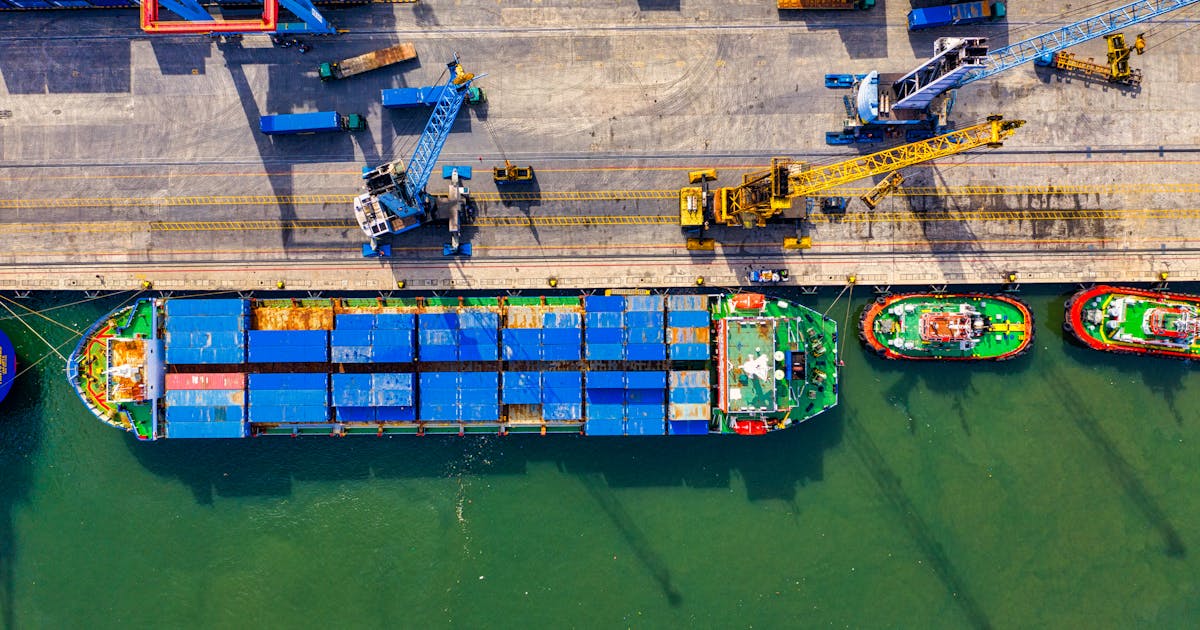
A free zone effectively acts as a bonded warehouse at scale. You can land cargo, store it duty-free for extended periods, consolidate or break bulk, re-label, and even carry out light manufacturing or assembly — all without paying import duty. This makes the UAE a natural re-export hub: goods arrive from Asia, sit in JAFZA, and are then shipped onward to Africa, the wider GCC or the Levant without ever being "imported" into the local economy.
Re-export is where free zones earn their reputation. A trader buying from China and selling across the region can hold stock close to demand, ship in smaller batches, and only pay duty in each final destination — never twice. If your supply chain runs along that corridor, our China to Middle East shipping guide explains the lanes, transit times and documentation that pair naturally with a JAFZA storage strategy.
When mainland import makes sense
If your goods are destined for sale and consumption inside the UAE — retail stock, project materials, equipment you will use locally — there is no advantage in routing through a free zone first. You will pay the 5% duty and 5% VAT eventually anyway, and the extra free-zone movement only adds handling cost and paperwork. Mainland import is also required where the buyer holds a mainland trade licence and needs the goods on a domestic commercial invoice. A registered importer recovers the 5% import VAT through the normal VAT return, so for a VAT-registered local business the real net cost is often just the 5% duty.
When the free zone wins
The free-zone route suits traders who: re-export the bulk of their volume, need duty deferral while goods await onward sale, consolidate cargo from multiple origins, or want regional distribution stock without committing duty up front. JAFZA's connection to Jebel Ali Port — the busiest container port in the Middle East — and its dedicated free-zone licensing make it the default choice for this model.
Cross-border letters of credit and bonded re-export often go hand in hand; if you are financing the trade, our primer on letter of credit basics shows how documentary terms align with free-zone movements.
Get the structure right before you ship
Choosing free zone versus mainland is not just a customs formality — it shapes your cash flow, your storage strategy and your margins. A good forwarder will model both routes for your specific goods, HS codes and destination mix before the container moves. You can find a UAE forwarder on GDS to handle JAFZA entry, bonded storage and onward re-export, and if you are still mapping the players in your chain, start with what a freight forwarder actually does.